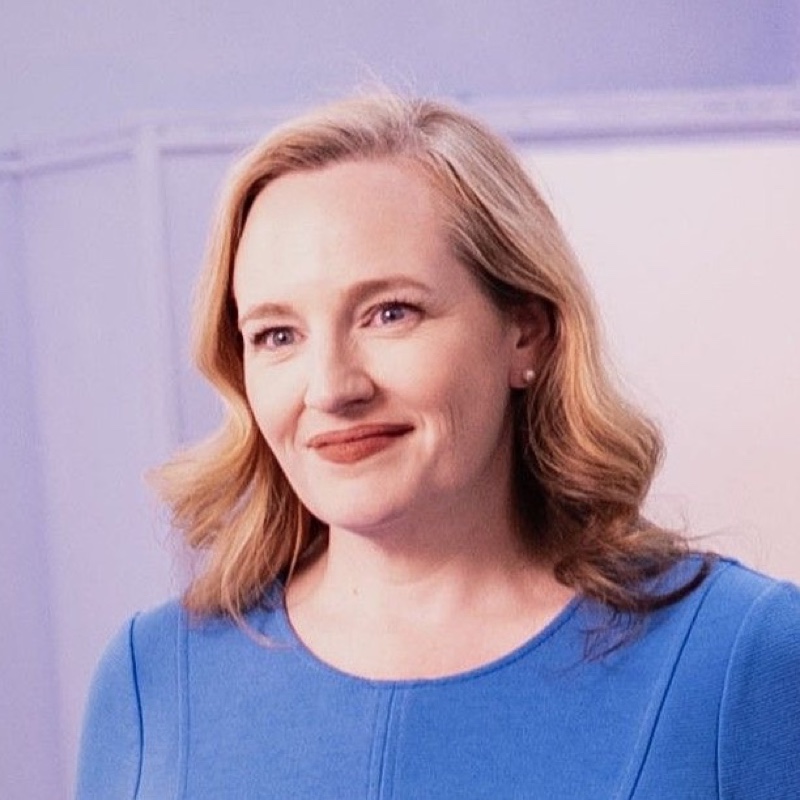
Why are you running for office, and how does your background and experience shape your ability to be an effective public servant, specifically when it comes to serving young people, specifically under the age of 35, in BIPOC, working-class, rural, and immigrant communities of Wisconsin?
I am a progressive fighter who knows how to use power to make people’s lives better. I’ve spent my life working to elect Democrats statewide and turn progressive ideas into law in the toughest political environments. Born in Marshfield, I spent my early years in rural Taylor County north of Highway 29, where my family lived in a one-room schoolhouse and I had a pet goat.
As a state senator on the state's budget-writing committee, I have seen firsthand how state government does and does not meet the needs of people throughout the state. For too long, Republicans in the legislature have been prioritizing tax cuts for the wealthy instead of prioritizing helping people gain access to the middle class. As governor, I have plans to protect Wisconsinites from the harms of the Trump regime and deliver an economy that serves the needs of everyone in the state.
What do you believe to be the top concerns and specific challenges facing young people under the age of 35, in communities across Wisconsin? How would you prioritize and advance these priorities once in office?
Young people are discouraged by the lack of action from their democracy. Our government has been incredibly non-responsive and dysfunctional for 15 years. My goal as governor is to remind people of the awesome power of our democracy by delivering higher wages, lower costs, and the freedom to thrive in every community across the state. We do that by making sure our public schools have the resources they need, every kid can trust the water coming from the faucet in their homes, and we are prioritizing evidence-based measures for public safety. When we do those things, we will be creating a state where people want to start their careers and their families.
How do you assess the current state of housing affordability in Wisconsin as it relates to residents under the age of 35? What factors do you believe are contributing to rising housing and rental costs, and what specific policies or actions would you support to make housing more affordable and accessible?
As governor, I will continue my legislative work to expand housing supply and increase affordability and housing security. Building more housing, and the right mix, is essential to bringing down the cost. These are my four main strategies:
Zoning reform to make it easier and faster to build diverse housing types, from ADUs to cottage courts, duplexes, and townhomes. Predictable zoning laws allow streamlined approval of compliant projects, lowering the cost of housing. In real estate, time is money.
Increase housing security for renters. I’ll restore tenant protections after years of Republican attacks on landlord-tenant laws. These rollbacks put many renters in an even more precarious situation and make it harder to ensure safe, habitable rental housing. To prevent homelessness, I’ll enact a right to counsel in housing court and fund emergency housing assistance, because preventing evictions is always cheaper and preferable than rehoming someone after housing loss. I have also taken aim at some of the most abusive practices, such as AI-driven price-fixing schemes that enable landlords to artificially inflate rent.
Streamline WHEDA’s affordable housing tax credits to provide greater approval certainty and speed, so more projects are built more quickly. Many tax credit programs have requirements so specific and financing stacks so complex that many worthy projects don’t get built. Rather than creating many small programs, each with separate scoring and applications, we should make it faster and easier for projects to know right away if they will receive funding. We should also allocate a significant portion of tax credits to keeping expiring affordable units affordable. It’s less expensive to retain affordability of an existing unit than to buy down the cost of new development so it’s affordable.
Focus on missing owner-occupied housing. My small business is focused on helping make it easier and more affordable for Wisconsinites to buy and sell homes, but it’s no longer common for people to be able to buy a home in their 20s. The state should make it easier and less risky for developers to build better affordable owner-occupied housing – condos, cooperatives, cohousing, land trusts, and smaller single family homes. This helps first time buyers on the front end to get a market foothold and baby boomers on the back end who are ready to downsize but need a place to park their equity – making the overall housing market more liquid.
Climate and environmental decisions made today will have long-term impacts on Wisconsin residents under the age of 35, including energy costs, public health, infrastructure, and economic opportunity. As Wisconsin sees growth in large-scale developments, including data centers and other energy-intensive projects, how would you balance economic development with environmental sustainability and affordability? What specific policies or actions would you support, and how would you measure their impact on young adults?
Big Tech is steamrolling communities, damaging our environment, and using massive energy. I have the strongest plan to stop unregulated development of data centers immediately and put local communities in the strongest bargaining position, including establishing an expert public negotiating team to support local communities who pursue data centers. My plan includes day one directives to the PSC and DNR to enforce existing protections, while passing stringent new state laws to require transparency, meaningful local control, environmental and worker protections, and absolute protections for ratepayers. I’ll end data center subsidies, charge them higher rates, and require upfront payments of hundreds of millions of dollars to stop speculators and ensure taxpayers aren’t hurt if a project goes bust. That money will capitalize a public infrastructure bank that will give no-interest loans to schools and municipalities to make clean energy upgrades like geothermal HVAC and solar panels, to help us meet our 100% renewable energy by 2050 goal. But we can’t just regulate the buildings, we must regulate the products, too. That’s why I’ve authored more bills than any legislator in the state to regulate AI, social media, crypto, and big data.
How do you assess the current state of employment, education, and workforce training opportunities for Wisconsin residents and what actions would you support to improve outcomes specifically for young adults under the age of 35?
For decades, Wisconsinites’ productivity has gone up and up, but the gains – the profits – have gone almost entirely to the people at the very top. That means that as young people enter the workforce, workers and the middle class can’t really afford the basics of a “good” life - to buy a house, have kids, save for college and retirement, take a vacation – even though we are working harder and longer than ever. As governor, I will use my power to empower everyday Wisconsinites to thrive and allow young people to build the life they want. Higher wages, lower costs, and more freedom. Here’s what that looks like specifically:
Raise the minimum wage to $15/hr immediately and $20 by 2030, while ending the tipped minimum wage.
Restore collective bargaining rights for all workers and enable more worker solidarity
Aggressively regulate big tech, AI, and data centers, to protect our environment, our economy, our privacy, and our humanity.
Make college affordable by expanding Bucky’s Tuition Promise statewide, using a last-dollar tuition credit program to make the first 2 years of college free, and expanding student loan forgiveness for graduates serving in high needs areas
Make housing more affordable by restoring tenants’ rights, building more condos and other affordable entry level homes for purchase, zoning changes to enable more density and more affordable housing types to be built, and more efficient use of our current tax credit programs for affordable housing.
All of these things work together to create an environment where young people want to start their adult lives in Wisconsin and then they have the support to build a better life here.
Rural communities across Wisconsin face unique challenges in accessing education, training, and career opportunities. How do you assess these barriers for residents under the age of 35 in rural communities, and what specific policies would you support to improve access to technical education and workforce pathways?
Proper state funding of public schools, and fixing the funding formula, will make education more equitable, rather than dependent on neighborhood wealth. In elementary school, more funding yields smaller class sizes, more support professionals, and better literacy screening and tutoring – all of which give every child a strong foundation for reading and learning. Additional funding for public higher education is important too, including my last-dollar tuition credit program to make the first two years of college free, whether at a UW campus or a technical college. Paying professional students during their practicums, just as trade apprentices are, will enable more students from low-income backgrounds to become social workers, teachers, and nurses, and diversify our workforce in these high-impact careers.
Wisconsin’s statewide safety net - including healthcare access, unemployment benefits, housing assistance, and education or job training opportunities - helps people navigate periods of transition and hardship. How well do these systems meet the needs of Wisconsin residents specifically under the age of 35, what gaps exist, and what specific policies would you support to make these resources more accessible and effective for young adults?
Our statewide safety net needs improvement, there's no doubt about it. We need to stop tying economic security solely to jobs. We should have more assistance for people to pay for housing and improve the unemployment system so to reduce the lag time for people to get much needed money. Again, I would like to refer to my healthcare plan as a good example of how I will approach these issues. My healthcare plan protects Wisconsinites from losing great coverage when they switch jobs or lose a job, and I will work with the legislature to make sure that coverage is affordable when an individual doesn't have the means to pay the premium. The healthcare piece is critical to maintaining economic security, and that's why I will continue to emphasize its importance.
What do you believe are the primary drivers of affordability challenges for Wisconsin residents under the age of 35, and what specific policy solutions would you pursue to lower costs and improve economic security for young adults?
To address the affordability crisis, I have detailed plans to raise the minimum wage, restore workers’ rights, and lower costs for childcare, housing, groceries, utilities, and prescription drugs at keldaroys.com.
But healthcare is the most urgent problem facing Wisconsinites and an example that demonstrates my approach to lowering costs. I have a bold, Trump-proof plan to expand affordable coverage by allowing any Wisconsinite or business to buy into the same health insurance state employees have. This will enable everyone – school districts, manufacturing companies, independent contractors – to buy high quality, competitively priced, often nonprofit coverage, at no cost to taxpayers. Small businesses can start, compete, and grow. Plus, by covering more people and expanding the pool, we will reduce uncompensated care, lower premium costs for everyone including taxpayers, and keep rural clinics and hospitals open. Roys also has committed to work with the legislature to subsidize lower income Wisconsinites who are not poor enough for Medicaid but cannot otherwise afford to buy into the state plan or another ACA plan.
As governor, what steps would you take to engage young adults under the age of 35, outside of electoral cycles to strengthen year-round participation in community and civic life?
We need to proactively bring more people into the democratic process. Often, young people are engaged during a campaign cycle and then communication stops during the actual government process. We need to make participation in democracy a year-round activity.
If Wisconsin residents between the ages of 18 and 35 take away just one message from your responses, what do you hope it is, and why?
I am the candidate with the proven ability to deliver progressive change in any legislative environment. When I talk about using democracy to deliver higher wages, lower costs, and more freedom, I speak from experience. I know what our democracy is capable of, but we need a governor who has the skill necessary to be effective.